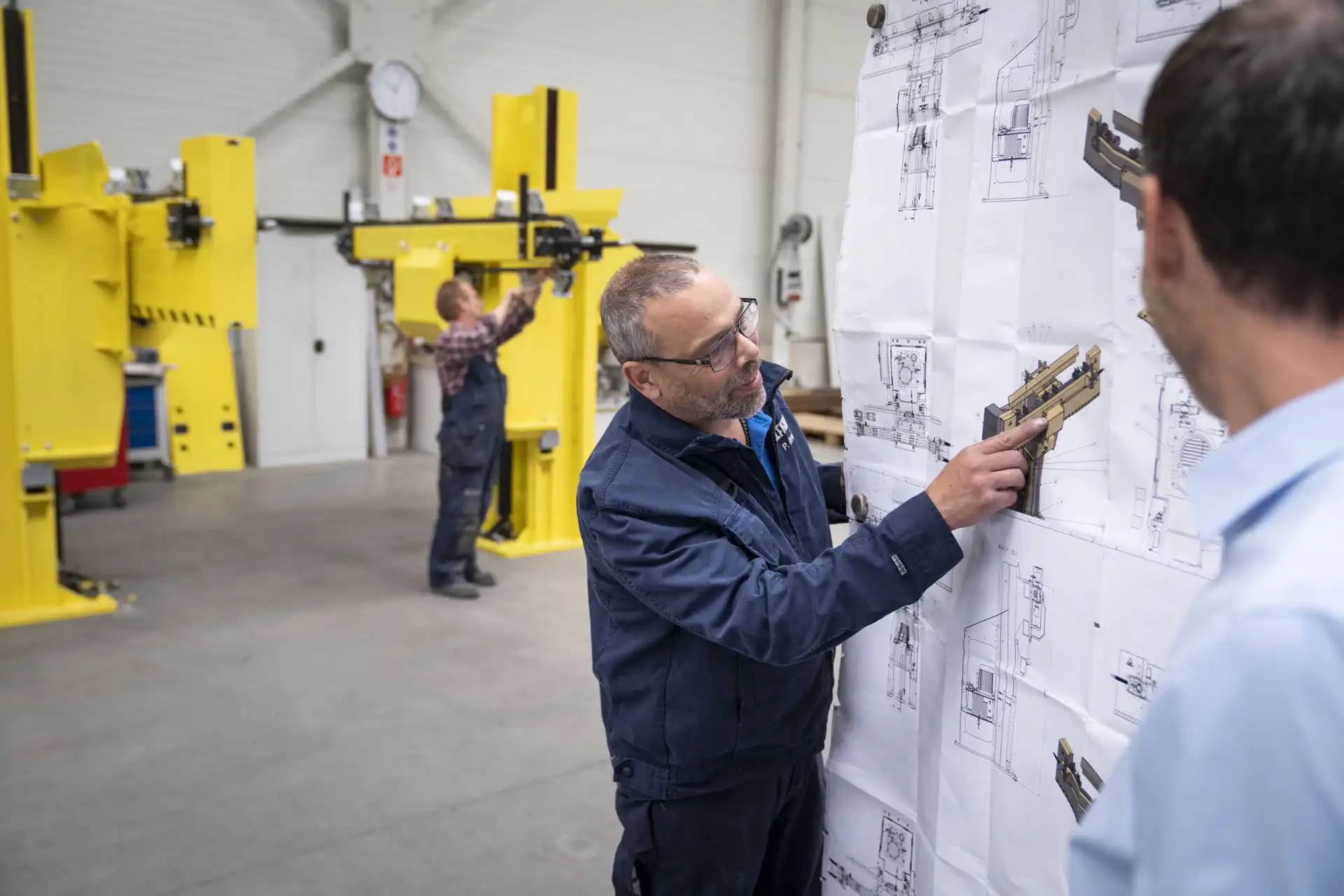
Handling technology
Handling technology is an essential component of industry, focused on the efficient movement and positioning of materials. It plays a central role in optimizing production processes, improving safety, and reducing downtime.
What is handling technology?
Whether handling technology, handling device, or handling system – all of these terms ultimately refer to the same thing: solutions for the efficient movement, positioning, and handling of materials. In industrial processes, handling technology ensures that materials are safely and precisely transported, processed, and positioned through various production phases. It is a central component of process optimization and plays a crucial role in controlling the material flow and utilizing resources efficiently.
The importance of handling technology in industry
Handling technology is used in almost all industrial sectors, from manufacturing to logistics to warehousing. It ensures a smooth material flow, ensures continuous production supply, and increases both productivity and safety. At the same time, it reduces the risk of damage and injury.
Impact on safety and ergonomics
The automation of handling systems minimizes the need for manual interventions, thereby preventing potentially dangerous tasks such as lifting heavy loads. This not only promotes efficiency and safety in the workplace but also improves ergonomics and contributes to a more sustainable working environment.
Conveyor technology vs. handling technology: What are the differences?
While handling technology and conveyor technology are often used interchangeably, both technologies serve different purposes. Conveyor technology is primarily focused on the transport of materials, such as conveyor belts that move materials continuously from one point to another. Handling technology, on the other hand, focuses on the precise movement, positioning, and manipulation of materials, often in conjunction with complex tasks such as rotating, tilting, or positioning in specific areas.
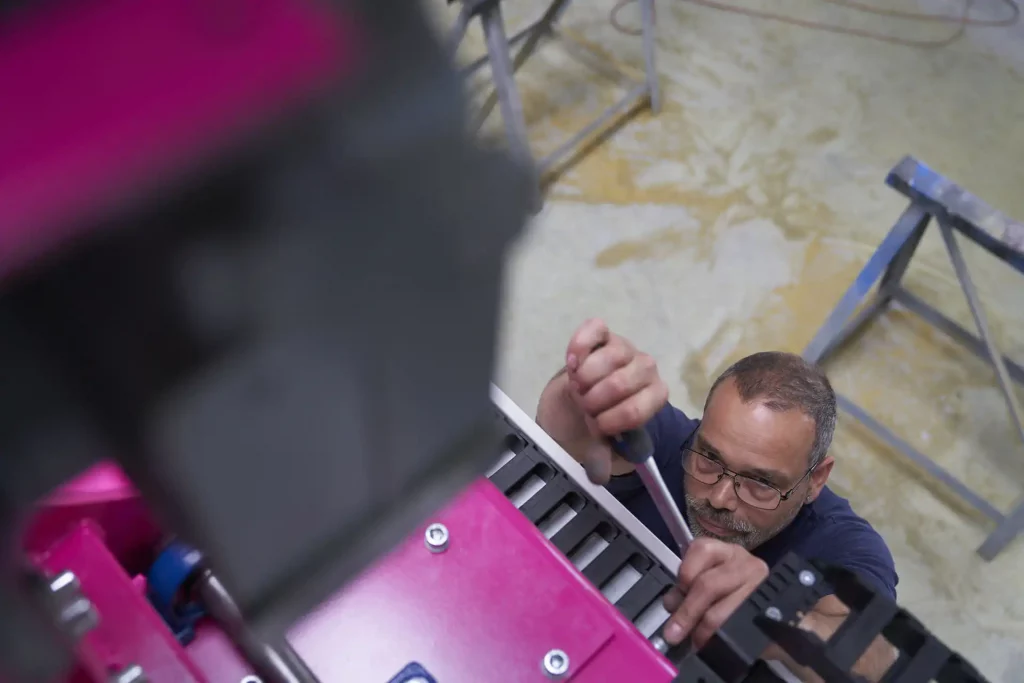
Conveyor technology: The transport of materials
Conveyor technology is primarily responsible for the transportation of materials—whether bulk goods or packaged goods. It ensures that materials are moved efficiently and continuously between various points within a system, such as in production lines, warehouses, or during transport between different stages of manufacturing.
Handling technology: Precise movement and positioning
Handling technology, on the other hand, goes beyond just transportation. It refers to the movement, positioning, and manipulation of materials with precise control. Here, materials are not only transported, but also rotated, lifted, stored, or positioned accurately—especially in areas such as assembly, packaging, or manufacturing-intensive processes, where precise movements are crucial to ensuring high quality.
And in practical terms?
In theory, the two areas are distinctly different: conveyor technology ensures the continuous material flow, while handling technology ensures precise movements and positioning. However, in many production processes, these tasks overlap, and often both technologies are used together. For example, a conveyor belt in an assembly process can transport the material and integrate a handling unit that positions or rotates the material for the next step.
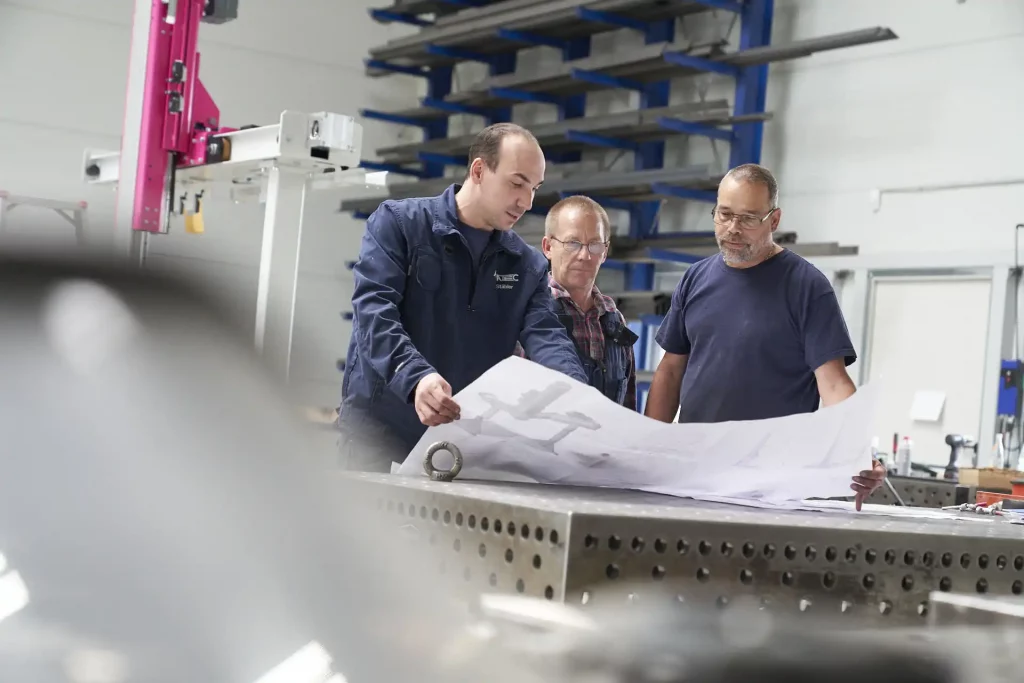
Handling technology at ALFATEC: Precision for heavy loads
At ALFATEC, we offer custom handling systems designed for precise positioning and the safe transport of materials. Our systems are specifically tailored to meet our customers’ requirements, enabling efficient handling of heavy loads, even under demanding conditions.
With a clear focus on safety and ergonomics, we seamlessly integrate our solutions into existing production processes, optimizing the material flow. We ensure that our handling systems meet the highest standards of precision and flexibility.
Types of handling technology
In handling technology, there are various systems that are tailored to different requirements and applications. These handling systems perform specific tasks and contribute to improving efficiency and precision in production.
Linear units: These systems enable linear movements and are designed for high speeds. They are characterized by high-precision positioning and are the dynamic solution for robotic applications. In the form of heavy-duty linear units (SLE), they are designed for high payloads.
Lift and drive systems: These systems enable the lifting and moving of loads in both vertical and horizontal directions. They are used in automated high-bay warehouses as rack handling devices (RBG) and ensure fast and precise storage and retrieval of goods. The ALFATEC guide rollers ensure smooth and low-maintenance operation.
Portal systems: These systems are known for their robustness and are particularly suitable as multi-axis linear systems for transferring, stacking, and separating heavy loads. Whether for batteries, gearboxes, wooden pallets, stones, or with special grippers – this handling system helps to automate the application.
Distinction between stationary and mobile handling systems
Handling systems can be broadly classified into stationary and mobile systems, depending on whether the system is installed at a fixed location or can move freely. This distinction is important to better understand the respective requirements and possible applications of the systems.
Stationary handling systems
Stationary handling systems are permanently installed at a fixed location and move materials within a specific area. They are commonly used in production lines or automated warehouses, where the material flow needs to be optimized along fixed routes.
Mobile handling systems
Mobile handling systems are flexible and can be moved to different locations within a facility. These systems offer high flexibility and are ideal for applications where the positioning of materials at various places is required, without needing to reconfigure the entire production line.
Important parameters of handling systems
When planning and selecting handling systems, various parameters play a crucial role. These specifications affect the efficiency, precision, and safety of the systems and must be tailored to the specific requirements of the application.
Load capacity and durability
A central factor in handling technology is the load capacity of a system. It indicates how much weight the handling system can move safely and reliably. This is particularly important when heavy materials or components need to be transported. The load-bearing capacity refers to the maximum load the system can move over a prolonged period without overloading or causing damage.
Repeatability and positioning accuracy
Another essential parameter is the repeatability of the handling system. Systems that require precise positioning of materials, such as in assembly processes, must provide high accuracy. This not only concerns transport but also the ability to place or rotate materials in specified positions.
Speed and response time
The speed of a handling system is crucial for making production processes efficient. Systems that operate at high speeds must ensure that materials are moved quickly while maintaining safety. Response time refers to the duration it takes for the system to react to commands. This is particularly significant in automated processes, where a quick response to changes in material flow is necessary.
Flexibility and adaptability
Flexibility is another essential parameter, especially for mobile handling systems. These systems must be capable of transporting or positioning different types of materials. The adaptability of a system refers to its ability to adjust to different requirements and environments, such as in changing production lines or evolving manufacturing processes.
Complexity of motion sequences
The complexity of the movement sequences refers to how many types of movements a handling system can perform. Systems that move materials and lift, tilt, or rotate them require complex control technology and ensure efficient material handling in manufacturing processes.
Reliability and maintenance effort
Finally, the reliability of the system plays a central role. A system must operate stably over extended periods without frequent failures. The maintenance effort describes how easy or difficult it is to maintain and repair the system. Lower maintenance effort is often an indicator of a robust and durable system.
Handling technology briefly summarized
Handling technology plays a central role in industrial production, both in automation and manufacturing. It ensures the efficient, precise, and safe movement and positioning of materials, helping to optimize material flow, enhance safety, and accelerate production processes. With customized solutions from ALFATEC, companies can improve their production processes and make material handling even more efficient.