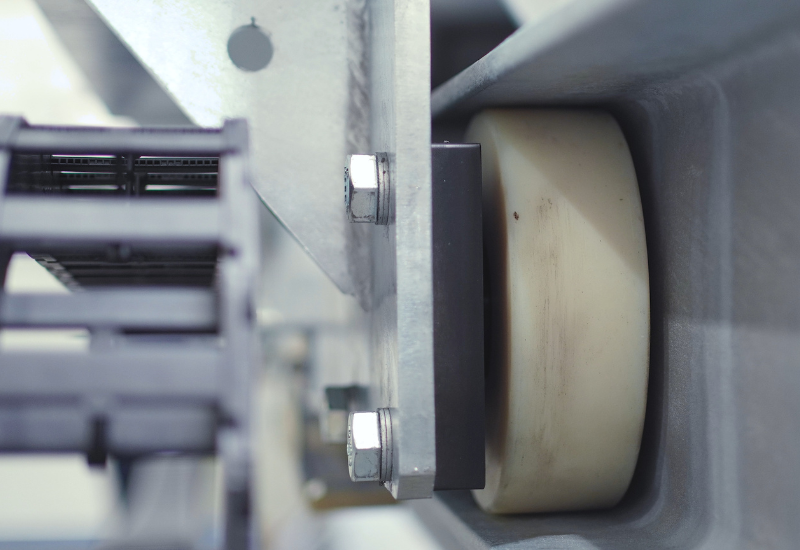
Linear guide for heavy loads
Linear guides are a central component in various applications. They ensure that machine parts are guided precisely and stably along a predefined path.
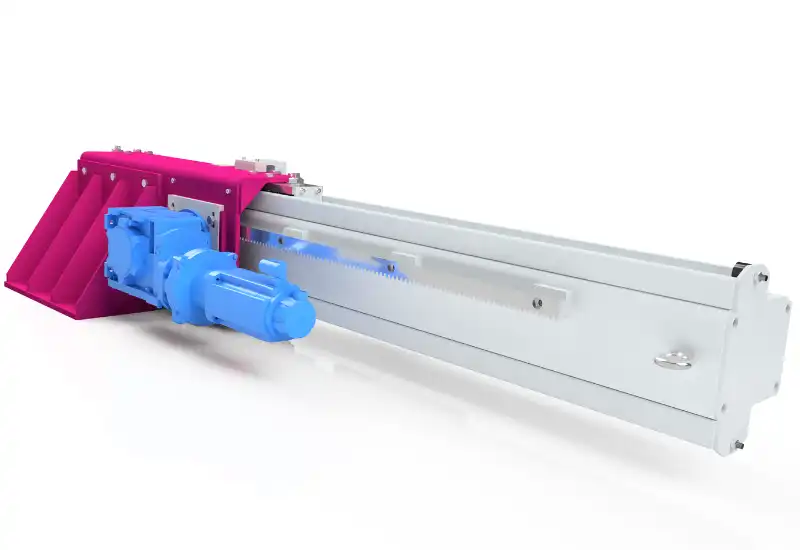
What is a linear guide?
A linear guide is a mechanical device designed to enable and guide linear motion along a defined path. It typically consists of a rail guide and a movable carriage or slider that travels along the rail. This allows for the precise movement of even heavy loads.
How does a linear guide work?
The operating principle is based on the movement of the carriage along the rail, either through friction or rolling bearings. These bearings reduce friction and enable smooth motion. The choice of the appropriate operating principle depends on the requirements for load capacity, precision, and speed.
Where are linear guides used?
Linear guides are used in numerous industrial sectors where precise and repeatable linear movements are required. These include mechanical engineering, automation, medical technology, and other fields. They are often used in handling systems for moving heavy loads.
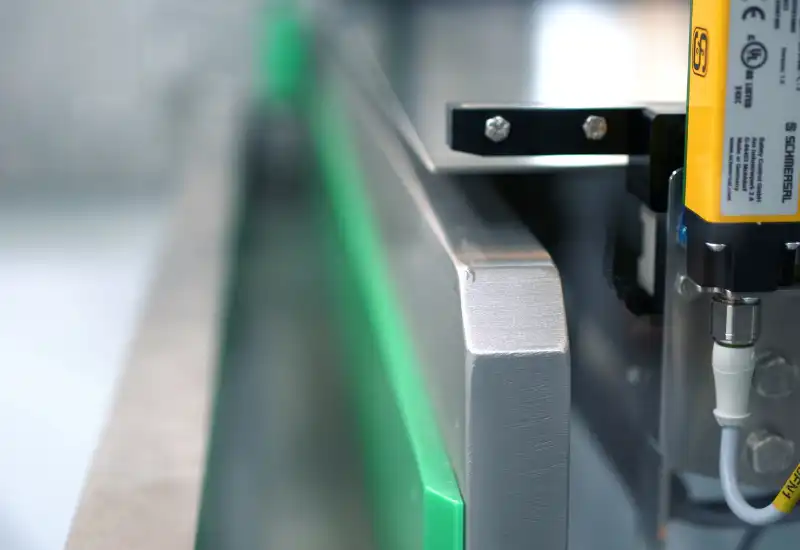
ALFATEC linear guides for your heavy loads
Our linear system consists of proven ALFATEC guide rollers and profiles and is specifically designed for heavy loads. This ensures reliable and precise movement of your heavy-duty applications. They combine a robust construction with reinforced bearings and, if necessary, special lubrication systems to meet the high demands of challenging environments.
- Modular System: Our modular kit system allows for individual customization and modularization of your conveyor technology.
- A combination of high-quality materials and precise conveyor technology ensures optimal performance and durability.
- Designed to withstand high radial and axial loads while enabling precise positioning.
Special features of heavy-load linear guides
A heavy-duty linear guide can support extremely high loads while ensuring precise and low-friction movement. Compared to conventional linear guides, it features a more robust construction, reinforced bearings and guide elements, as well as specialized lubrication systems to withstand heavy loads. For example, our linear guides based on heavy-duty rollers can handle loads of up to 200 tons.
Heavy-duty linear guides are ideal for applications requiring the movement or positioning of heavy workpieces or components, such as in heavy industry, material and goods processing, or machinery and plant construction.
Difference between linear system, linear unit, and linear guide
The three systems – linear system, linear unit, and linear guide – are closely related and often work together to enable precise linear motion.
- A linear system is a complete setup designed to enable, control, or regulate linear motion. It consists of various components such as linear guides, drives, motors, controllers, sensors, and potentially other auxiliary devices. Linear systems are used in diverse fields, from industrial production and robotics to medical equipment.
- A linear unit is a specific component of a linear system that executes linear motion. It typically consists of a guide rail, a carriage, or slide, a drive, a motor, and possibly sensors or other additional elements. Different types of linear units are used in various applications, ensuring precise and reliable linear movement—for example, ALFATEC heavy-duty linear units.
- Linear guides are usually part of linear units and other linear systems. However, they can also be used separately in various applications, ranging from simple drawer slides to ALFATEC guide profiles and rollers. They typically consist of a guide rail and a moving carriage or slide that glides along the rail.
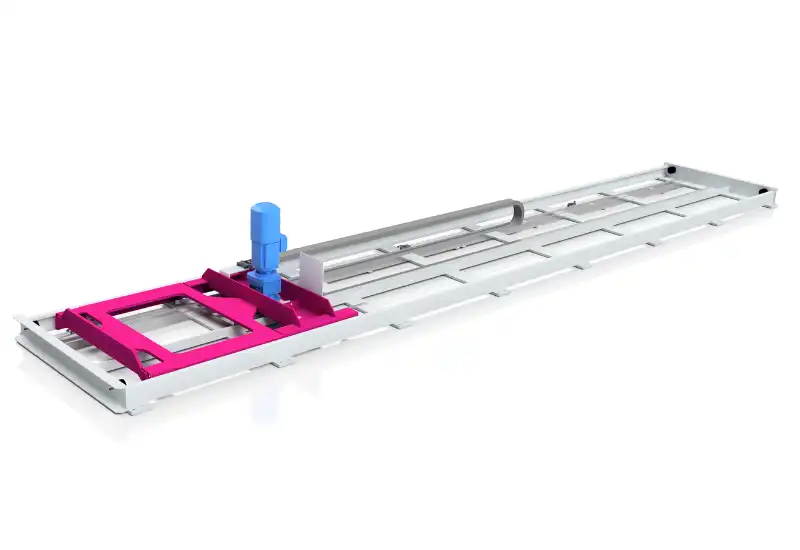
What types of linear guides are there?
There are different types of linear guides, including slide, roller, and ball guides. Slide guides use a direct contact surface between the guide rail and the carriage, while roller guides use rollers or cylinders to reduce friction. The choice of the appropriate type depends on factors such as load capacity, precision, and speed.
Materials and Manufacturing of Linear Guides
By selecting suitable materials and applying high-quality manufacturing techniques, linear guides can ensure optimal performance and durability in various applications. The material selection for linear guides depends on several factors, including load, environment, and application. Typically, materials such as steel, aluminum alloys, and stainless steel are used.
How Are Linear Guides for Heavy Loads Manufactured?
Precise manufacturing techniques are required for the production of linear guides to ensure high accuracy and repeatability. Typical processes include hot rolling, extrusion, grinding, cutting, drilling, and welding.
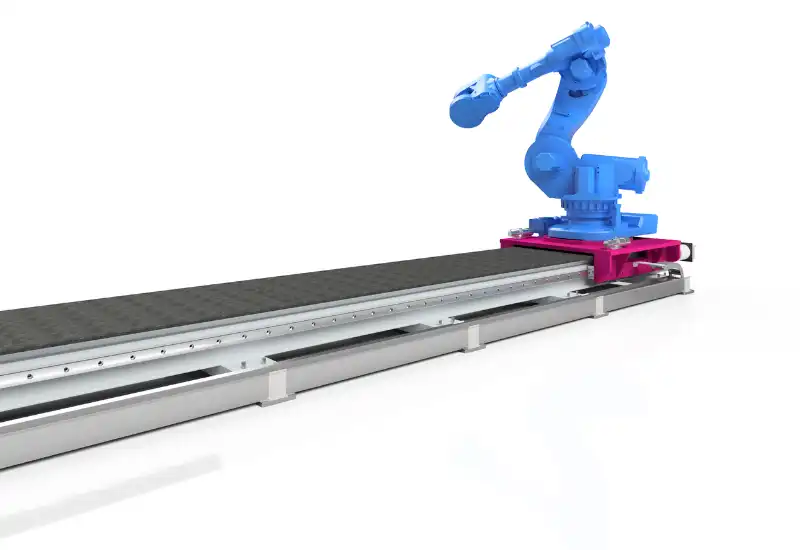
Linear guides for demanding environments
Heat-resistant linear guides
In systems that generate heat, a linear guide with heat resistance is required. They are used in various sectors, such as industrial furnace applications, automotive and metal processing, glass and ceramics industries, as well as aerospace. These specialized linear guides enable reliable and precise movement despite the extreme heat.
Linear guides protected from contamination
If the system is located in a dirty environment or generates a lot of dust itself, the use of a dust-protected linear guide is advisable. This ensures a long operational lifetime. This can be the case in industries such as wood processing, food and beverage industries, and construction. Dust-protected linear guides are equipped with seals that protect the moving parts from contamination while enabling low-friction movement.
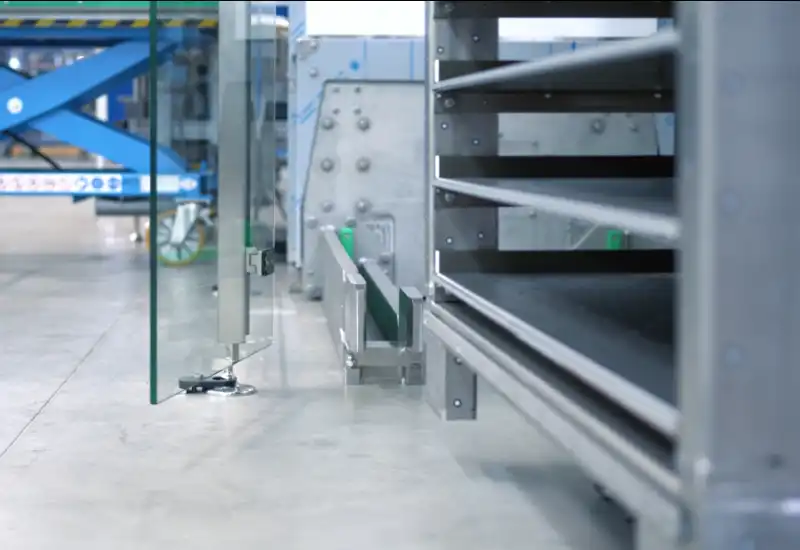
Use of heavy-duty linear guides in handling systems
Linear guides are used in various fields and can enable versatile movement sequences in complex systems through a modular design. By precisely coordinating movements across multiple axes, loads can be effortlessly moved even in complex environments.
Lifting and traveling systems for horizontal movement
Linear guides are used in lifting and traveling systems for horizontal movements to transport loads along storage or production areas. The linear guides ensure smooth and precise movement, significantly improving the efficiency and safety of the transportation processes. These systems are crucial for the flexible and fast movement of materials within large facilities.
Combined into complex handling systems – rack handling units
By combining linear guides on different levels, complex handling systems such as stacker cranes are created, which are used in automated warehouses. These systems combine the functions of lifting and traveling systems and extend them with additional movement axes. A stacker crane moves horizontally along the X-axis to reach different storage areas, vertically along the Y-axis to serve different shelf levels. Additionally, the load handling devices of the stacker cranes can move forward and backward along the Z-axis to precisely retrieve or store goods from the shelves.
Precise movements through heavy-duty linear guides
These coordinated movements across multiple axes are enabled, among other things, by the robustness and precision of heavy-duty linear guides. They ensure that each movement is executed smoothly and accurately, optimizing the efficiency of storage processes and increasing productivity. By the ability to build linear guide systems on top of one another, the systems can be flexibly adapted to specific requirements and loads, significantly enhancing their versatility and performance.
In summary: Linear guides
Linear guides are mechanical devices that enable precise and stable movement of machine parts along a defined path. They consist of a guide rail and a moving carriage and are often used in handling systems such as lifting and traveling systems to efficiently move heavy loads horizontally.